
The Most Aggressive Chess Openings for White and Black

There is a time for solid, positional maneuvering, and then there is a time to unleash absolute chaos. While playing defensively can secure you draws, playing aggressive chess openings forces your opponents into deep calculation, time trouble, and inevitable tactical blunders. If you want to increase your win rate and play spectacular, attacking games, you need a repertoire built for destruction.
In this comprehensive guide, we will break down the most aggressive chess openings for both White and Black. These are not just wild traps; they are structurally sound, high-tension battlefields favored by Grandmasters when they need a decisive victory.
Quick Answer: What are the most aggressive chess openings?
For White, the Scotch Game (1.e4 e5 2.Nf3 Nc6 3.d4) is the ultimate aggressive weapon, immediately bursting the center open. For Black, the Najdorf Sicilian (1.e4 c5 2.Nf3 d6 3.d4 cxd4 4.Nxd4 Nf6 5.Nc3 a6) offers the sharpest counter-attacking potential, while the Elephant Gambit (1.e4 e5 2.Nf3 d5) creates pure, psychological chaos on move two.
1. White's Arsenal: Breaking the Center Early
When you have the first-move advantage, you dictate the pace of the game. Instead of slowly building up a position in the Italian Game or the Ruy Lopez, you can drag Black into deep waters immediately.
The Scotch Game (1.e4 e5 2.Nf3 Nc6 3.d4)
Popularized in the modern era by Garry Kasparov, the Scotch Game refuses to let Black get comfortable. By playing 3.d4, White forces an immediate crisis in the center. After 3...exd4 4.Nxd4, White's Knight dominates the center, and both of White's Bishops enjoy open diagonals.
If Black tries to play naturally without knowing the theory, they will quickly fall victim to devastating kingside attacks or ruined pawn structures, especially in the sharp Mieses Variation.
Command the Center: The Scotch Game Mug
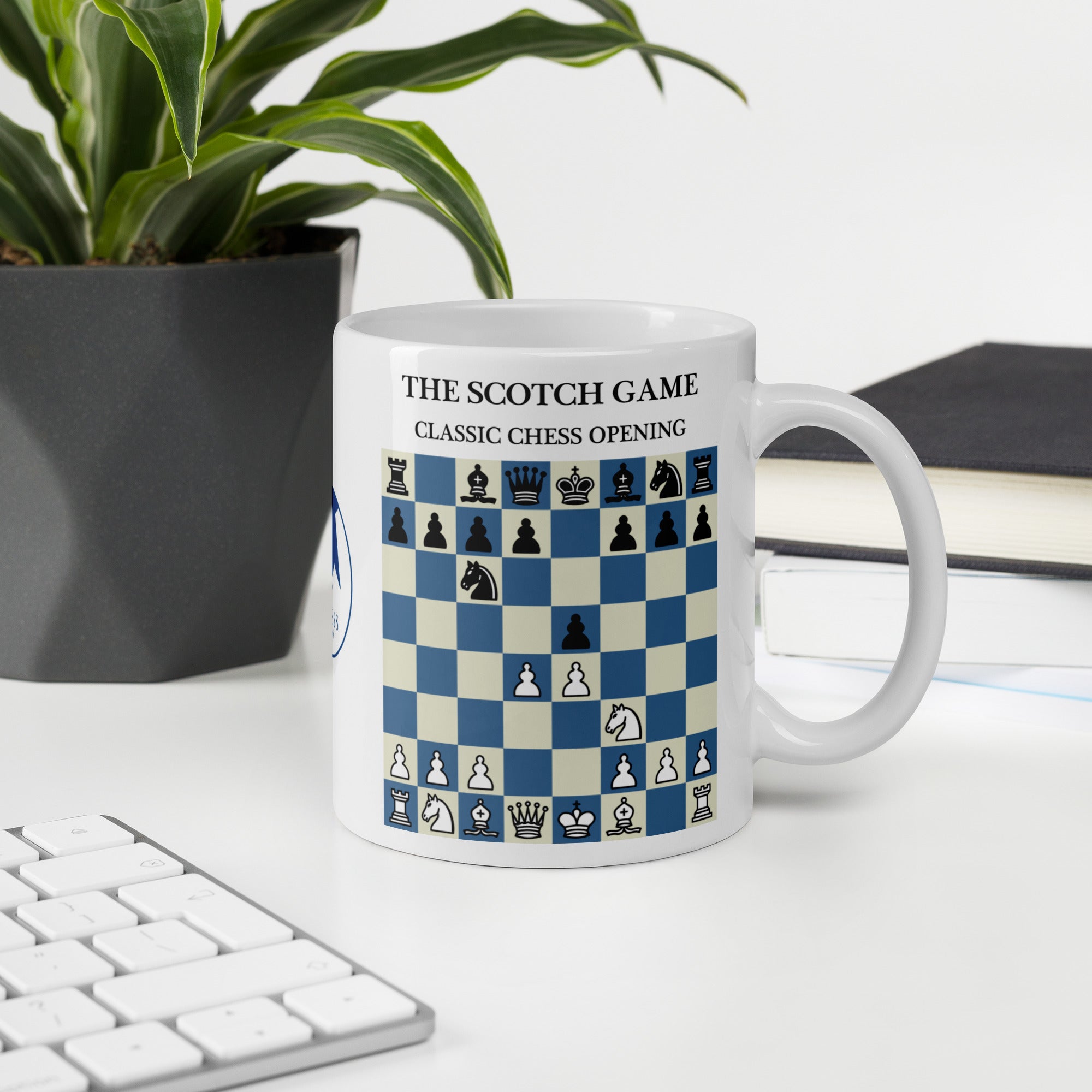
Declare your intentions before the first pawn is pushed. Our Scotch Game Mug is designed for 1.e4 players who refuse to play boring, symmetrical chess. Keep your tactical lines fresh with every cup of coffee.
GEAR UP FOR THE ATTACK2. Black's Arsenal: Counter-Attacking Brilliance
Playing aggressively with the black pieces is harder because White starts with the initiative. To win, you must invite White to overextend and then strike back with lethal force.
The Najdorf Sicilian (1.e4 c5 2.Nf3 d6 3.d4 cxd4 4.Nxd4 Nf6 5.Nc3 a6)
If there is a "Rolls-Royce" of aggressive openings, it is the Najdorf Sicilian. It was the weapon of choice for Bobby Fischer and Garry Kasparov. The defining move, 5...a6, looks slow, but it controls the critical b5 square, preventing White's Knights and Bishops from landing there.
The Najdorf leads to incredibly sharp positions where players often castle on opposite sides of the board. White throws everything at Black's King on the kingside, while Black launches a terrifying pawn storm on the queenside. It is a race where one tempo can mean the difference between a brilliant victory and a crushing defeat.
The Ultimate Counter-Punch: Najdorf Sicilian Mug
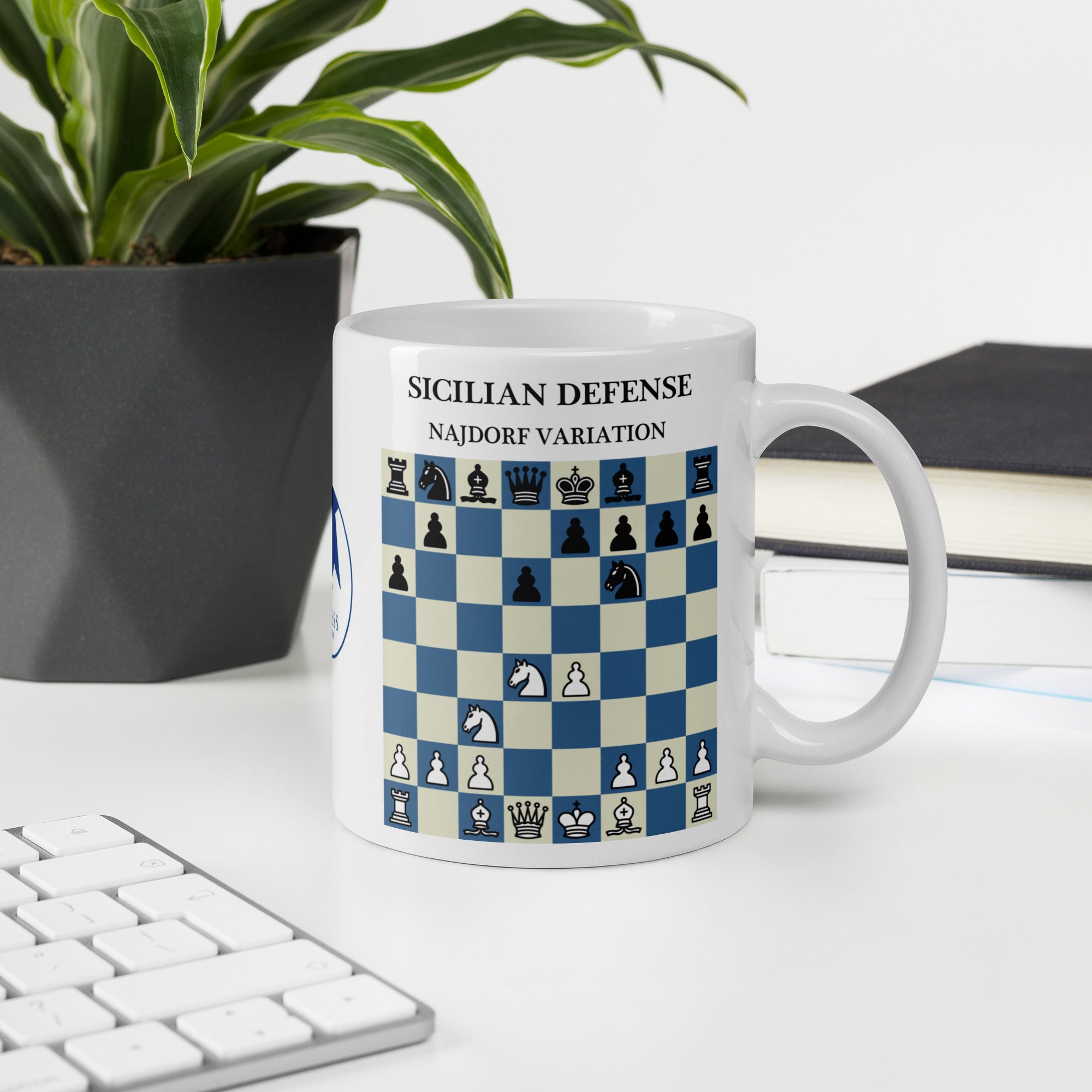
Mastering the Najdorf requires dedication. Show your opponents that you know your theory. Grab the Najdorf Sicilian Defense Mug and let them know you are ready for the English Attack.
REPRESENT THE NAJDORF3. The Chaos Factor: Gambits & Psychology
Sometimes, being aggressive means throwing objective engine evaluations out the window and dragging your opponent into a dark alley where theory doesn't exist.
The Elephant Gambit (1.e4 e5 2.Nf3 d5!?)
When White attacks the e5 pawn with 2.Nf3, they expect a quiet defense. Instead, playing 2...d5 strikes the center with explosive force. Black sacrifices a pawn immediately to accelerate development and create massive complications. If White does not know the exact theoretical response, they will be crushed in under 15 moves.
Embrace the Chaos: The Elephant Gambit Mug

Not a fan of memorizing 20 moves of Ruy Lopez theory? Blow up the center on move two. The Elephant Gambit Mug is for the fearless tactical player who thrives in complicated, messy positions.
UNLEASH THE ELEPHANT4. Aggressiveness & Complexity Comparison
Which aggressive weapon should you add to your repertoire? Use this chart to determine which opening fits your risk tolerance and study habits.
| Opening | Color | Aggressiveness | Theory Required | Playstyle Fit |
|---|---|---|---|---|
| Scotch Game | White | High | Medium | Direct, central dominance, rapid piece activation. |
| Najdorf Sicilian | Black | Very High | Very High | Complex counter-attacks, opposite-side castling, deep calculation. |
| Elephant Gambit | Black | Extreme | Low | Psychological warfare, chaotic tactical brawls, trap-heavy. |
| King's Gambit | White | Extreme | High | Sacrificing material for immediate development and kingside attacks. |
5. How to Train Your Attacking Vision
Playing aggressive openings requires sharp tactical vision. If you play the Najdorf, you must be able to calculate three or four moves deep to know if a piece sacrifice works. Staring at a 2D screen online is not enough to build this spatial awareness.
6. Frequently Asked Questions (FAQ)
Not necessarily. While highly theoretical openings like the Najdorf can overwhelm beginners, openings like the Scotch Game are excellent because they teach fundamental attacking principles, the value of the center, and how to look for tactical opportunities.
Chess engines evaluate positions perfectly and assume perfect defensive play from the opponent. In a practical human game, especially in blitz or rapid time controls, humans get nervous, make mistakes, and crumble under the pressure that a gambit creates. The psychological advantage often outweighs the slight engine evaluation drop.
The key to successful aggression is not recklessly pushing pawns, but developing your pieces with threats. Always ensure your King is safe (or relatively safe) before launching an all-out attack, and calculate your opponent's forcing responses (checks, captures, and threats) before committing to a sacrifice.
Keep Your Repertoire in Sight
41 ceramic mugs printed to order, each with the name and diagram of a classic opening.