
Cómo destruir 1.e4: Las 3 mejores defensas de ajedrez para las negras

Te sientas ante el tablero con las piezas negras. Tu oponente avanza con confianza su peón a e4. La batalla por el centro ha comenzado. Si simplemente los imitas con 1...e5 sin conocer la teoría, te arriesgas a caer en innumerables trampas como el Gambito de Rey, la Apertura Italiana o la agresiva Apertura Escocesa.
Para navegar con éxito la apertura con las piezas negras, necesitas un arma que dicte los términos del enfrentamiento. Necesitas una apertura que saque a las blancas de su zona de confort y las obligue a jugar tu juego. En esta guía completa, desglosaremos las tres defensas más efectivas y populares contra 1.e4, ayudándote a encontrar la que mejor se adapte a tu ADN ajedrecístico.
Respuesta rápida: ¿Cuál es la mejor defensa contra 1.e4?
La mejor defensa contra 1.e4 depende totalmente de tu estilo de juego. Para los jugadores que buscan una solidez inquebrantable y finales favorables, la Defensa Caro-Kann (1...c6) es la mejor opción. Para los jugadores que disfrutan de medios juegos estratégicos y cerrados, y de contraataques en el flanco de dama, la Defensa Francesa (1...e6) es ideal. Si eres un jugador agresivo y táctico que busca una lucha aguda para ganar, la Siciliana Najdorf (1...c5) es el estándar de oro absoluto.
1. La Caro-Kann: El muro de hierro (1...c6)
Si odias recibir jaque mate en las primeras 20 jugadas, la Defensa Caro-Kann es tu refugio. Al jugar 1...c6, las negras se preparan para golpear el centro con d5 en el siguiente turno, pero lo hacen de una manera que permite que su alfil de casillas claras se desarrolle libremente.
La Caro-Kann es famosa como la "Apertura del contable". Se basa en una fiabilidad estructural estricta. Las blancas a menudo obtendrán una ventaja de espacio desde el principio, pero la estructura de peones de las negras es tan sólida que las blancas frecuentemente se sobreextienden y cometen errores al intentar romperla.
2. La Defensa Francesa: Contraataque estratégico (1...e6)
La Defensa Francesa es una obra maestra de la tensión. Las negras juegan 1...e6 para preparar el avance d5. Las blancas suelen responder con 2.d4 d5, y de repente el centro queda bloqueado.
A diferencia de la Caro-Kann, la Defensa Francesa atrapa permanentemente al alfil de casillas claras de las negras detrás del peón de e6. Este es el "alfil malo". Sin embargo, a cambio de esta debilidad, las negras obtienen un devastador potencial de contraataque en el flanco de dama, golpeando constantemente el peón d4 de las blancas con jugadas como c5, Cc6 y Db6.
3. La Siciliana Najdorf: Al filo de la navaja (1...c5)
Para aquellos que consideran la Caro-Kann demasiado pasiva y la Francesa demasiado estrecha, existe la Siciliana Najdorf. Fue el arma legendaria de los campeones del mundo Bobby Fischer y Garry Kasparov.
Al jugar 1...c5, las negras desequilibran inmediatamente la posición, luchando por la casilla d4 desde el flanco en lugar del centro. La jugada definitoria de la Najdorf, 5...a6, actúa como un escudo flexible que impide que las piezas blancas invadan la casilla b5, preparando una masiva tormenta de peones en el flanco de dama. Requiere un profundo estudio teórico, pero ofrece las mayores probabilidades de victoria para las negras.
Elige tu arma: La colección de repertorio para las negras
Un verdadero jugador de ajedrez lleva su repertorio como una insignia de honor. Preséntate a tu próximo club o sesión de estudio matutina con la taza que combina con tu alma táctica.


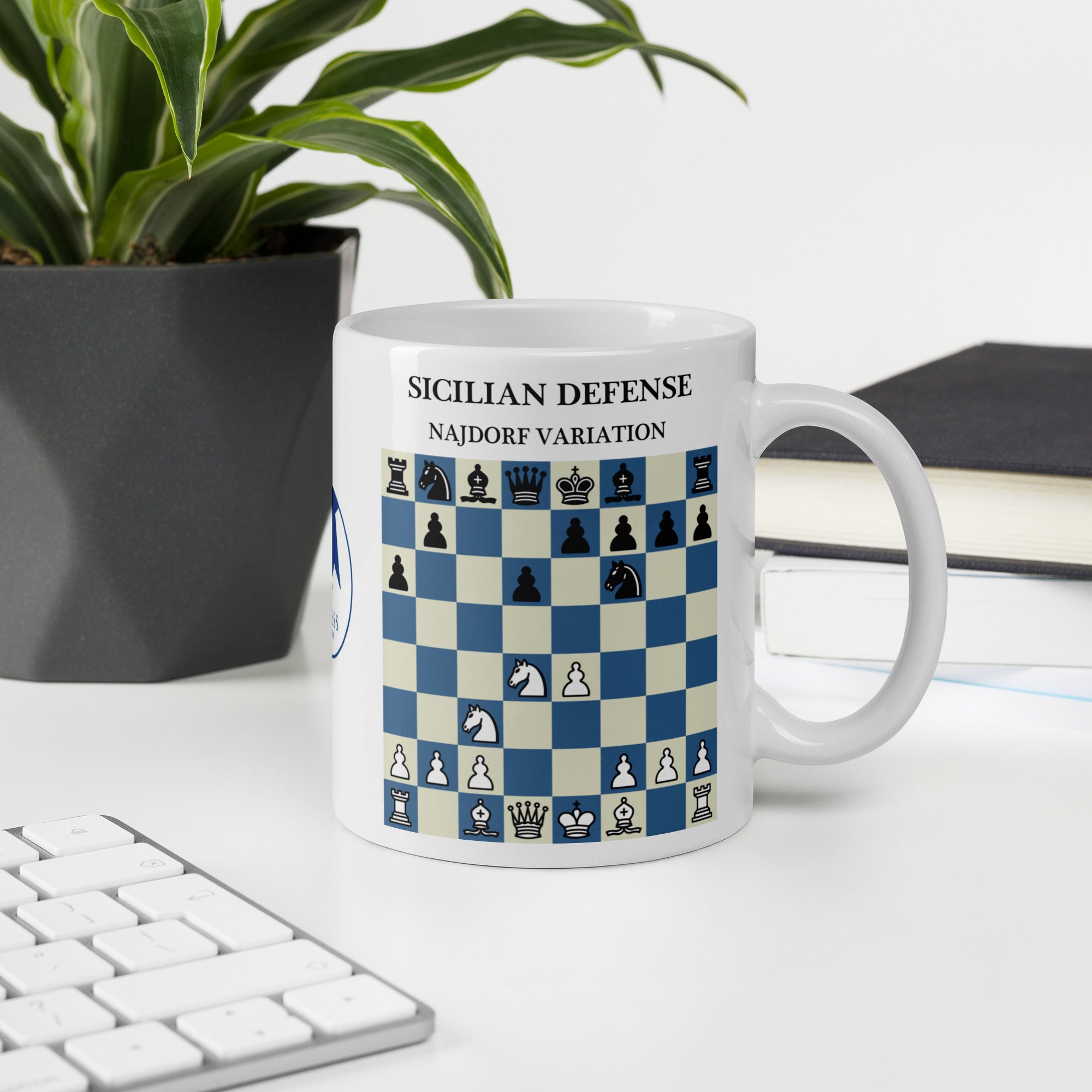
4. Matriz de comparación de defensas
¿Aún no estás seguro de a qué defensa dedicar tu tiempo de estudio? Usa esta matriz para hacer coincidir tu ELO y estilo de juego con la apertura adecuada.
| Defensa | Teoría requerida | Ritmo de juego típico | Ideal para... |
|---|---|---|---|
| Caro-Kann (1...c6) | Baja a media | Lento, maniobrable, enfocado en finales. | Jugadores que odian las tácticas tempranas y quieren seguridad. |
| Defensa Francesa (1...e6) | Media | Centro cerrado, muchas maniobras. | Jugadores posicionales que disfrutan de estructuras cerradas. |
| Siciliana Najdorf (1...c5) | Extremadamente alta | Rápido, caótico, altamente táctico. | Jugadores agresivos que buscan jugar a ganar, no a empatar. |
5. Dominando tu repertorio en un tablero físico
Ya sea que elijas el muro de hierro de la Caro-Kann o las líneas afiladas de la Najdorf, debes estudiar las rupturas de peones físicamente. Calcular las complejas variantes de la Siciliana en una pantalla 2D te dejará ciego cuando finalmente te sientes en un torneo real.
6. Preguntas frecuentes (FAQ)
Jugar 1...e5 está perfectamente bien y es muy recomendable para principiantes absolutos. Sin embargo, debido a que es muy común, los jugadores de blancas han pasado años preparando líneas profundas y difíciles contra ella (como el Gambito Evans o el Ataque Fegatello). Jugar la Caro, la Francesa o la Siciliana obliga a las blancas a entrar en líneas con las que están menos familiarizadas.
La variante Najdorf generalmente se considera demasiado teórica para jugadores con menos de 1200 ELO. A menudo es mejor que los principiantes jueguen la Caro-Kann para aprender fundamentos sólidos, o variantes sicilianas más simples como el Dragón Acelerado, antes de enfrentarse a la Najdorf.
Una ruptura de peón es un movimiento de peón que fuerza un intercambio en una estructura de peones cerrada para abrir líneas para tus piezas. En la Defensa Francesa, por ejemplo, jugar ...c5 o ...f6 son rupturas de peón cruciales necesarias para atacar el control central de las blancas.
Keep Your Repertoire in Sight
41 ceramic mugs printed to order, each with the name and diagram of a classic opening.